WindowSwap
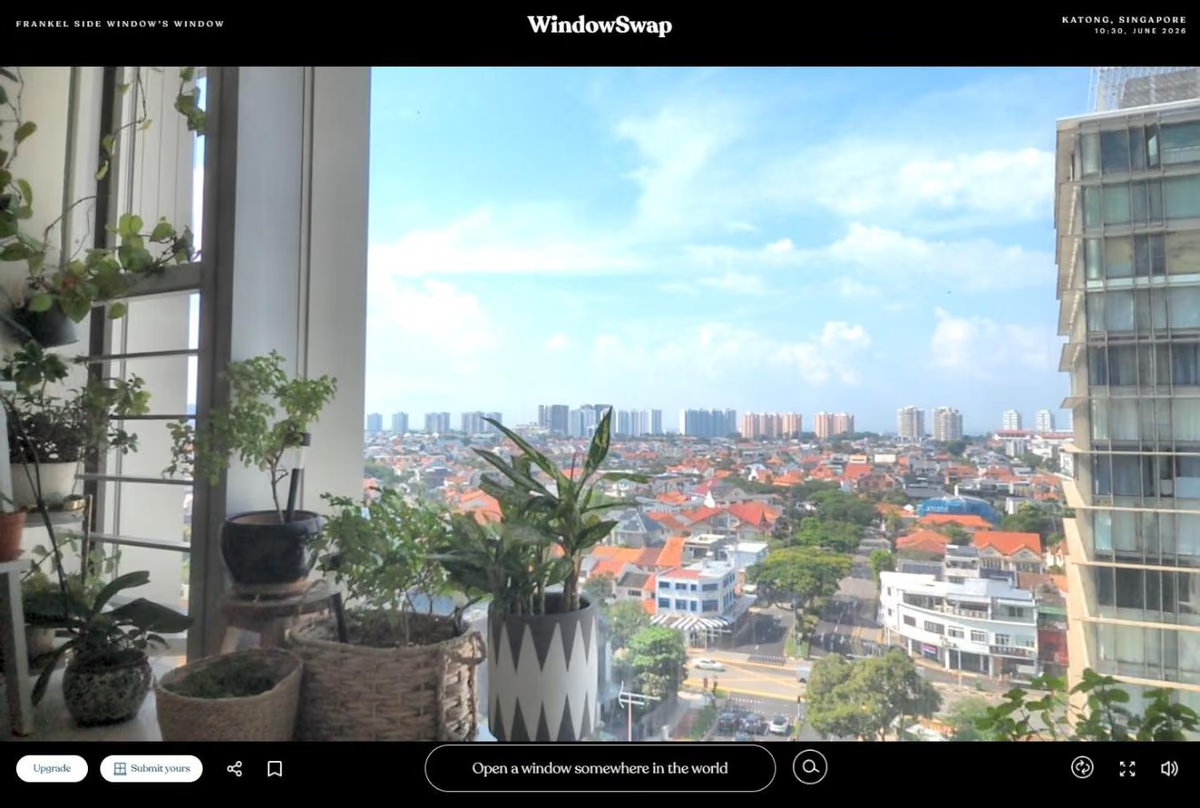
window-swap.comOne button: "Open a window somewhere in the world." Click it and you're leaning on a stranger's windowsill for the next ten minutes. Balcony plants over the red roofs of Katong, a university gate in Kaifeng at rush hour, rain in a town you can't pronounce. Real video, real sound, filmed by the person who lives there. Two advertising creatives built it in a Singapore flat during the 2020 lockdown because they were sick of their own view. Six years later it calls itself the calmest place on the internet, and the tagline is underselling.
🪟 The Backstory You Need
April 2020, Singapore. Sonali Ranjit and Vaishnav Balasubramaniam, married, both advertising creatives, were locked down in a flat whose window faced nothing much. The fix was very ad-agency: if you can't change your window, borrow someone else's. They asked friends to film the view from theirs and wired 16 windows to a webpage with a single button. No pitch deck, no roadmap, just a side project with a perfect name.
By July 2020 it was everywhere. Vice tried it, It's Nice That covered it, and half of locked-down Twitter sent each other the link captioned with some version of "I needed this." The collection has since climbed past 25,000 windows from 120+ countries, with more than 5.5 million visitors stopping by the sill. The spec never loosened: every submission is ten horizontal minutes, shot in good light with the window frame in view and nothing but natural sound, and a human approves it before it joins the rotation.
And it's still here in 2026, which is the impressive part. The lockdowns that created it are ancient history; the audience stayed. The couple kept it theirs, added a gentle $5-a-month All-Access tier, a Tip Jar that pays the actual window owners, and an artists' project that stitched 50 windows from 30 countries into one collaborative music video. The site the pandemic built turned out to be built for ordinary life.
🎨 Why The Site Wins
Let's address it: two wonder-sites in a row. After four straight months of honest workhorses we handed July to a spinning globe of radio, and the sensible move now would be some nice open-source CMS. It'll have to wait. WindowSwap takes August on nerve alone. This is the least a website has ever done to win this page, and every missing feature is a decision somebody had to defend. The teardown:
- The interface is one sentence The entire product is a pill-shaped button reading "Open a window somewhere in the world." No thumbnail grid, no category mega-menu, no hover previews. You don't browse windows; you receive one. Name another site from this decade whose complete information architecture fits on a fortune-cookie slip.
- You can't have what you want. That's the product Free viewers get no search, no filters and, famously, no back button. Close a window and it's gone, like the moment it was. The rest of the industry sells infinite choice and then monetizes the paralysis; WindowSwap enforces serendipity and watches you relax. You stop shopping. You start watching.
- Captions that out-write every About page on the internet "Frankel Side Window's Window. Katong, Singapore. 10:30, June 2026." Four facts, zero adjectives, and suddenly you're a guest in someone's morning. Most sites need 500 words and a brand voice guide to say less.
- The mandatory window frame is the whole trick The submission spec is exact: ten minutes, horizontal, good light, natural sound, frame in shot. That frame is the difference between stock footage of a skyline and standing at somebody's sill. Small rules like this are what taste looks like when it ships.
- Humans approve every window. Machines rank nothing A person reviews each video, and then it simply exists. Nothing trends, nothing is promoted, and there is no comment section, which after six years of user-submitted video might be the most disciplined call we've ever covered on this page. A lockdown view from 2020 rotates beside last month's monsoon.
- A paywall with manners The free product is whole. Five dollars a month buys the full archive, playlists, filters, search and, yes, the back button. Convenience is for sale; the magic never was. Better still, the Tip Jar routes money to the stranger who filmed your favorite view. No ads, no trackers, no data brokering. This is what a business model looks like when the designers win the argument.
🌅 How It Actually Works
Every step of the product, documented in full:
Count what's missing: onboarding, notifications, streaks, autoplay-next, a feed of any kind. WindowSwap wants ten quiet minutes of your day and nothing else. No mainstream product has asked that little of you since the screensaver.
💡 Why Designers Should Care
Because subtraction shipped. Every roadmap meeting has somebody asking what else the product needs; WindowSwap is six years of the other argument winning. No feed. No comments. No back button, until people offered to pay for one. The result outlived the crisis that created it, which is more than most feature factories can claim.
Steal the microcopy discipline first. "Open a window somewhere in the world" does more work than any EXPLORE NOW button ever shipped, and the four-fact captions embarrass every 500-word About page. Steal the constraint: withholding search and rewind is what made the experience, and the paid tier proves the users understood the trade. And steal the pricing ethics: sell convenience, tip the creators, leave the soul alone.
Holding attention in 2026 was supposed to require an algorithm, a streak counter and a push-notification budget. A window and honest sound hold it for ten minutes straight. Remember that the next time somebody tells you calm doesn't convert.
The Quiet Antidote, Still Open
WindowSwap is one button, 25,000 windows, and the nerve to never become more than that. Two ad creatives wired 16 friends' windows to a webpage in lockdown; six years later, strangers in 120+ countries are still leaning on each other's sills. It survived going viral, survived the pandemic ending, and survived every temptation to become a platform. It just opens a window.
July's Radio Garden proved the web can still feel like magic. WindowSwap proves it can still feel like a place. Somewhere right now the light is different, the traffic sounds wrong, and a cat you will never meet is asleep on a sill you will never lean on. It's one click away, it's free, and it will show you before it asks you for anything.
Go open a window. Leave the sound on.