Canva
Canva has fundamentally changed how the world creates. What started as a simple drag-and-drop design tool in 2013 has evolved into a $26 billion visual communication platform serving over 190 million monthly active users across 190 countries. From social media managers to Fortune 500 marketing teams, Canva proves that democratizing design doesn't mean dumbing it down—it means removing unnecessary barriers while preserving creative power.
Visit Website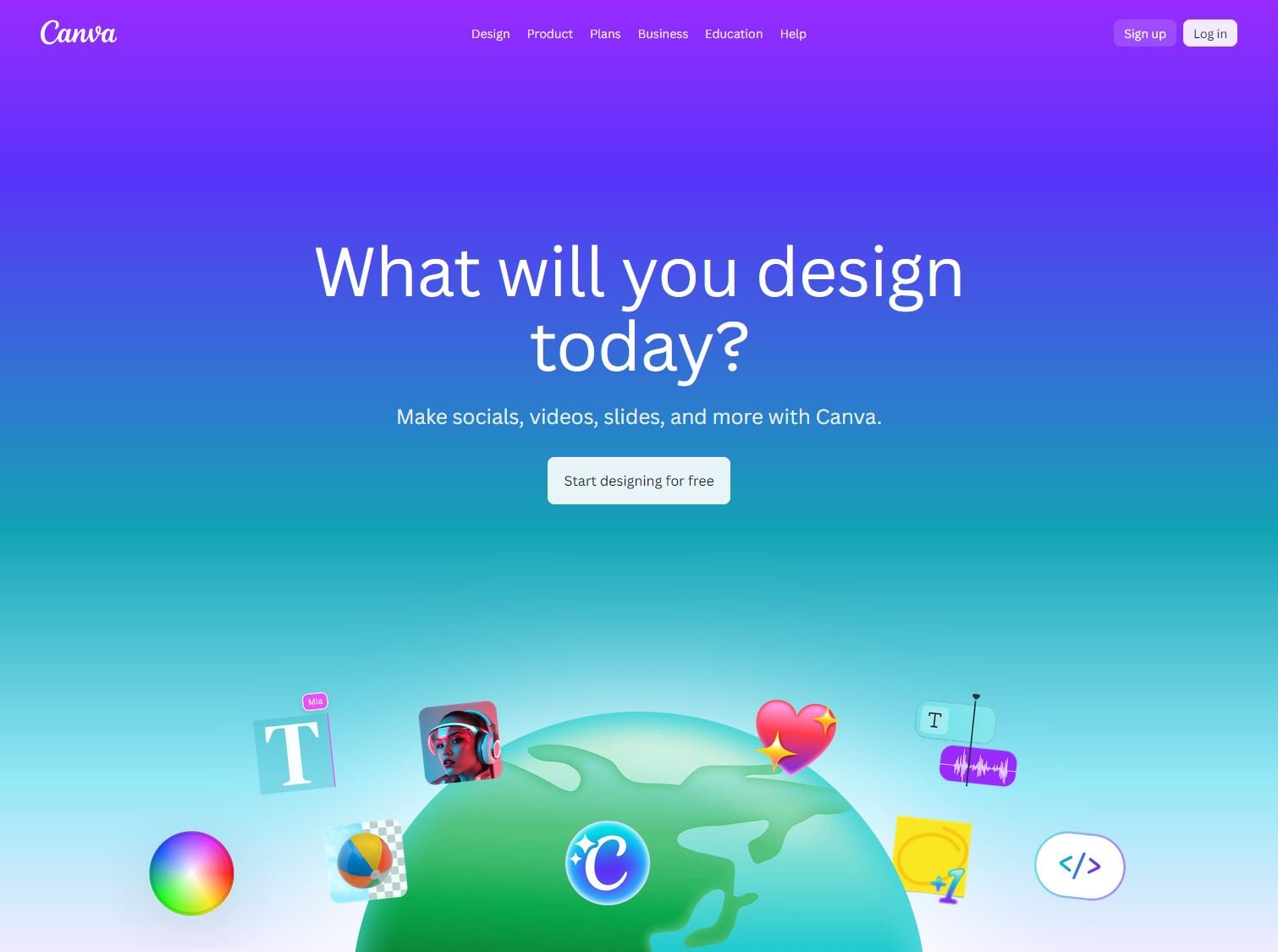
Why We Chose Canva
Canva represents a rare achievement in software: making something genuinely powerful feel effortlessly simple. In an industry that often conflates complexity with capability, Canva's founders—Melanie Perkins, Cliff Obrecht, and Cameron Adams—proved that the best tools disappear into the work itself. Their mission to "empower everyone in the world to design anything and publish anywhere" isn't marketing speak—it's engineering philosophy made manifest.
The platform's genius lies in its layered complexity. A first-time user can create a polished Instagram post in minutes using templates and drag-and-drop. A professional designer can access advanced features like brand kits, custom fonts, SVG editing, and team collaboration tools. The same interface serves both—no mode switching, no "pro version" that hides features behind paywalls that matter.
What impresses us most is Canva's relentless iteration. They've shipped AI-powered features like Magic Design, Magic Write, and background removal that actually work. They've built a marketplace where creators earn real income from templates. They've expanded into documents, presentations, whiteboards, and video—each integration feeling native rather than bolted on. This is what happens when a company treats design as a core value, not a department.
Design & User Experience Excellence
Intuitive Editor
The canvas-based editor feels natural from first click. Drag elements, resize with handles, align with smart guides. No tutorials needed—the interface teaches itself through progressive disclosure and contextual hints.
Template Ecosystem
Over 250 million designs created daily from 600,000+ templates. Each template is professionally designed and fully customizable. The recommendation engine learns your style and surfaces relevant starting points.
AI Integration
Magic Design generates layouts from prompts. Magic Write drafts copy. Background Remover works instantly. Text-to-image creates custom graphics. AI enhances rather than replaces the creative process.
Real-Time Collaboration
Multiple users edit simultaneously with live cursors and comments. Brand kits ensure consistency across teams. Approval workflows streamline review cycles. It's Google Docs for visual content.
Technical Architecture
Behind Canva's simple interface lies serious engineering. The web-based editor handles complex vector graphics, high-resolution images, and real-time collaboration without plugins or downloads. Performance remains snappy even with dozens of elements on the canvas—a testament to their rendering optimization and lazy loading strategies.
Canva's infrastructure serves billions of requests daily across a globally distributed CDN. Their media processing pipeline handles millions of image transformations, video renders, and PDF exports. The platform supports offline editing through service workers, syncing changes when connectivity returns. This is enterprise-grade infrastructure wrapped in consumer-friendly packaging.
The Australian Startup Story
Canva's origin story is Silicon Valley mythology, except it happened in Perth, Australia. Melanie Perkins was 19 when she started a school yearbook design company, frustrated by how hard it was for students to use existing design software. That frustration became a mission: what if anyone could design anything?
The path wasn't easy. Perkins pitched investors over 100 times before securing seed funding. She and co-founder Cliff Obrecht flew to Silicon Valley repeatedly, sleeping on air mattresses and networking relentlessly. When they finally met Bill Tai (who would become an investor and advisor), they pitched him while kitesurfing—because that's where he spent his time.
What set Canva apart was Perkins' unwavering focus on the end user. While competitors added features for power users, Canva obsessed over the first-time experience. Every feature had to pass the "mom test"—could her mother figure it out without instructions? This constraint bred innovation. Complex capabilities got packaged into one-click solutions. The magic happened behind the scenes.
The Visual Suite Expansion
Canva has evolved far beyond static graphics. Canva Docs brings design-first thinking to documents—finally, business documents that don't look like they were made in 1995. Canva Presentations competes directly with PowerPoint and Google Slides, with templates that make anyone look like a professional presenter. Canva Whiteboards enable visual collaboration for remote teams.
The video editor deserves special mention. What started as simple animations has grown into a capable video creation tool with timeline editing, transitions, stock footage, and audio mixing. It's not replacing Premiere Pro, but for social media videos, marketing content, and internal communications, it's more than enough—and infinitely more accessible.
Print integration closes the loop. Design a business card, order it printed, delivered to your door. Create event materials, send them to a local printer. Canva has built partnerships with print providers worldwide, turning digital designs into physical products with a few clicks. The platform thinks in terms of outcomes, not just files.
Brand Management & Enterprise
Canva for Teams and Canva Enterprise address a real pain point: brand consistency at scale. Brand Kits lock in colors, fonts, and logos. Templates become starting points that enforce guidelines while allowing customization. Folder structures and approval workflows bring order to creative chaos.
The enterprise offering competes with Adobe Creative Cloud and dedicated brand management platforms, but with Canva's signature accessibility. Marketing teams can empower sales reps to create on-brand materials without design training. Regional offices can localize campaigns without breaking brand guidelines. IT departments get the admin controls and security compliance they need.
This enterprise push is strategic. While consumer users drive adoption and brand awareness, enterprise contracts drive revenue stability. Canva has landed major accounts including Salesforce, American Airlines, and Zoom. The product-led growth model—free users becoming paid users becoming enterprise buyers—creates a flywheel that traditional enterprise sales can't match.
Creator Economy & Marketplace
Canva's marketplace has created a new economy for designers. Template creators earn royalties when their designs are used. Stock contributors license photos and videos. The platform has paid out hundreds of millions to creators, establishing a sustainable ecosystem where quality content flows naturally.
This creator layer solves the content freshness problem. Instead of relying solely on an internal team, Canva taps into a global network of designers producing templates for every occasion, industry, and aesthetic. Trending topics get templates within days. Niche needs find coverage that a central team could never justify.
For designers, it's a new revenue stream that complements client work. A wedding invitation template can earn passive income for years. A well-designed Instagram template pack might generate more revenue than a client project. Canva has democratized not just design creation, but design monetization.
Impact on the Industry
Canva changed expectations for design tools. The old model—expensive software, steep learning curves, professional training required—now feels antiquated. Adobe responded with Express. Microsoft invested in Designer. Figma built FigJam. The entire industry shifted toward accessibility because Canva proved the market existed.
More importantly, Canva changed who considers themselves a "designer." The social media manager who makes engaging posts. The teacher who creates classroom materials. The small business owner who designs their own marketing. Millions of people now create visual content who never would have attempted it before. That's genuine democratization.
The environmental impact is often overlooked. By enabling remote design collaboration and print-on-demand, Canva reduces waste from overprinting. Their commitment to carbon neutrality and climate initiatives shows a company thinking beyond quarterly metrics. The Canva Foundation has committed to giving away the majority of the founders' equity to charitable causes.
Looking Forward
Canva's AI roadmap suggests the next evolution of design tools. Magic Studio bundles their AI features into an increasingly capable suite. The technology improves monthly—better image generation, smarter layout suggestions, more accurate background removal. The goal isn't AI replacing designers but AI amplifying human creativity.
International expansion continues with localization efforts that go beyond translation. Templates for Diwali in India, Lunar New Year in China, local holidays worldwide. This cultural intelligence makes Canva feel native everywhere, not like an American product with translations.
For January 2026, we're honored to recognize Canva as our Website of the Month. In an era when tech companies often prioritize engagement metrics over user value, Canva has built something genuinely useful—a tool that helps people create, communicate, and express themselves visually. That's worth celebrating.
